
Posted on

The 5 greatest Britons and their legacy

Screenshot 2022 01 26 at 13.56.31

Who are the most influential Britons of all time? Many names will seem familiar to you, but what exactly did these people mean and what did they do? An English TV channel held an election for "most influential Briton" several years ago. Learn more about these extraordinary people! We start with number 5 and will end with the Brit who was voted the most influential Brit of all time.

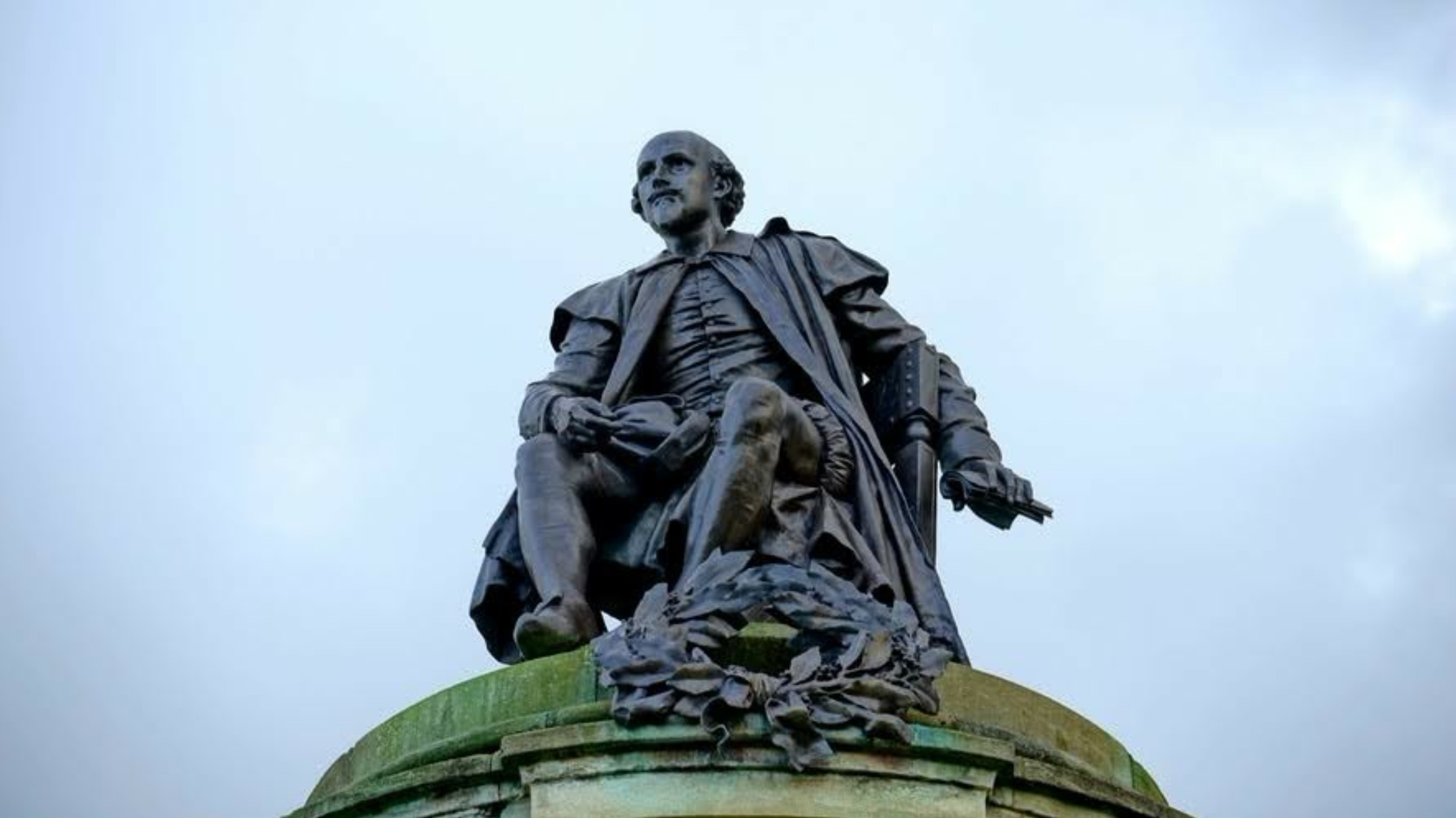
Number 5: William Shakespeare (1564 - 1616)

English playwright, poet and actor William Shakespeare is considered the greatest English writer and the world's greatest playwright. He is the "National Poet" and "The Bard" of the UK. His approximate works include 39 plays, 154 sonnets and 3 story poems. His plays have been translated into every living language and Shakespeare is still performed more often than any other playwright. Among his absolute best works are the tragedies written before 1609, especially Hamlet, Romeo and Juliet, Othello, King Lear and Macbeth.

Number 4: Charles Darwin (1809 - 1882)

English naturalist, geologist and biologist Charles Robert Darwin brought us the theory of evolution. He came up with the theory that all terrestrial life species descend from a shared ancestor. From there, they evolve according to the principle of natural selection, in which the "struggle for life" determines which species and characteristics are transmitted and which disappear.

Number 3: Diana Frances Spencer (1961 - 1997)

As the first wife of the current British heir to the throne, Charles, the Prince of Wales, Diana (Lady Di) was a member of the British Royal Family (Princess of Wales). She is the mother of Princes William and Harry. In a short time, this rebellious princess made a deep impression on the British people: as a media star and fashionista, as well as an activist and charity worker.

In a special way, she focused on improving the living conditions of children and the elderly, cancer patients and persons with mental illnesses. Her campaigns for the social acceptance of AIDS patients and the removal of landmines in old war zones took the crown.

Number 2: Isambard Kingdom Brunel (1806 - 1859)

Englishman Brunel was an engineer and one of the most important figures of the Industrial Revolution. He built docks, railroads, steamships, bridges and tunnels. Brunel stands out in particular for his innovative solutions to long-standing engineering problems. Among other things, he built the first tunnel under a navigable river (the Thames) and the first iron propelled steamship. His Great Western Railway, meanwhile, set the standard for well-built railroads, and he introduced numerous new construction techniques, bridges, viaducts and tunnels.

Number 1: Winston Churchill (1874 - 1965)

Sir Winston Leonard Spencer Churchill was an English politician and multiple Prime Minister. He receives the title of Greatest Briton primarily for his efforts as Prime Minister during World War II (1939/45). As early as the 1930s, Churchill was the main opponent of the policy of peace toward Adolf Hitler and his policy of expansion. In September 1939, his opposition proved well-founded and Britain also ended up in the greatest war conflict of the 20th century.

In May 1940, Churchill takes office as Prime Minister to revitalize and better organize the British war effort. With inspired speeches and direct popular consultations, he secures the morale of his citizens in the most difficult circumstances. Especially during 1940/41, when Germany conquered Europe and neither Russia nor America played along, he managed to distinguish himself as a political and military leader.

The greatest Dutchman

An election for The Greatest Dutchman was also held in the Netherlands. The place of honor is awarded by most voters to the Father of the Netherlands, William of Orange. Famous painters Rembrandt and Van Gogh are also in the top 10.
Posted on

The benefits of a bilingual education

Screenshot 2022 01 26 at 13.49.16

Bilingual parenting is more central today than ever. This is not only because there are more international couples, with one parent speaking a different language than the other. Parents are also more interested in multilingualism as they themselves travel or work more in international settings.

However, bilingual parenting also brings some challenges and question marks. Are you curious about how to raise your child in other languages? With this handy overview, you can get started on raising your child with bilingualism.


Why choose a bilingual education?


A bilingual upbringing offers many benefits, and at any age. For example, researchers have made many important findings in children exposed to multiple languages at an early age.

A study shows that the brains of multilingual children develop differently. These children make multiple connections, requiring the brain to work harder to find the right one. For example, pronouncing "dog" activates associations in two languages in a multilingual child. The brain then searches for the right answer in the right language. Because of that brain activity, their brain is more flexible.

Multilingualism also has many advantages later in life. Speakers of multiple languages can focus better and remember more information. Well-developed cognitive skills make it easier for them to jump between tasks.

Multilingualism, of course, also opens many doors for your child's choice of study and job. With a high level in English, they can later study abroad, do an international internship or work at a multinational company.


How do you raise your child bilingually?

A distinction is made between two types of multilingual education: simultaneous or successive. The choice depends on your own language skills as well as your child's age and personality.

In simultaneous bilingual parenting, a child is immersed in both languages from birth. For example, one parent speaks Dutch while the other speaks in English. Children's brains are very flexible and can quickly pick up on these differences. However, a good knowledge of English is very important, and that both of spelling and grammar. This will prevent your child from learning incorrect sounds, words or sentence structures.

In successive bilingual parenting, the language is not offered until a later age, such as at school or at a language camp. So your child already has a good foundation in the mother tongue before another language is learned. For many parents, this is a convenient solution. Your child learns another language easily, quickly and flawlessly.


Frequently asked questions about bilingual parenting

Won't my child be confused by these two languages?
Children can learn and understand and apply rules very quickly. They easily adapt their language to the person or situation, even without realizing it. For example, a child may speak English with one parent, and Dutch with another. Language may also be location-specific. For example, they may realize that they speak Dutch at home, but communicate in English at school.

They may initially incorporate Dutch words into an English sentence, or vice versa. However, that stops as the children continue to grow up and gain experience with the languages.


I don't speak English very well myself. Is it still a good idea to speak English?

If your own second language is limited, it is better to just speak Dutch. It is especially important to give them a good foundation in their mother tongue. They use that basis to acquire and anchor the second language. They then learn the second language, such as English, with teachers or monitors, for example at school or camp.


Will my child learn both languages well?

For language acquisition, it is best to start offering both languages as early as possible. The younger they start learning another language, the more likely they are to pick up both languages as their mother tongue.