
Posted on

The 5 greatest Britons and their legacy

Screenshot 2022 01 26 at 13.56.31

Who are the most influential Britons of all time? Many names will seem familiar to you, but what exactly did these people mean and what did they do? An English TV channel held an election for "most influential Briton" several years ago. Learn more about these extraordinary people! We start with number 5 and will end with the Brit who was voted the most influential Brit of all time.

Number 5: William Shakespeare (1564 - 1616)

English playwright, poet and actor William Shakespeare is considered the greatest English writer and the world's greatest playwright. He is the "National Poet" and "The Bard" of the UK. His approximate works include 39 plays, 154 sonnets and 3 story poems. His plays have been translated into every living language and Shakespeare is still performed more often than any other playwright. Among his absolute best works are the tragedies written before 1609, especially Hamlet, Romeo and Juliet, Othello, King Lear and Macbeth.

Number 4: Charles Darwin (1809 - 1882)

English naturalist, geologist and biologist Charles Robert Darwin brought us the theory of evolution. He came up with the theory that all terrestrial life species descend from a shared ancestor. From there, they evolve according to the principle of natural selection, in which the "struggle for life" determines which species and characteristics are transmitted and which disappear.

Number 3: Diana Frances Spencer (1961 - 1997)

As the first wife of the current British heir to the throne, Charles, the Prince of Wales, Diana (Lady Di) was a member of the British Royal Family (Princess of Wales). She is the mother of Princes William and Harry. In a short time, this rebellious princess made a deep impression on the British people: as a media star and fashionista, as well as an activist and charity worker.

In a special way, she focused on improving the living conditions of children and the elderly, cancer patients and persons with mental illnesses. Her campaigns for the social acceptance of AIDS patients and the removal of landmines in old war zones took the crown.

Number 2: Isambard Kingdom Brunel (1806 - 1859)

Englishman Brunel was an engineer and one of the most important figures of the Industrial Revolution. He built docks, railroads, steamships, bridges and tunnels. Brunel stands out in particular for his innovative solutions to long-standing engineering problems. Among other things, he built the first tunnel under a navigable river (the Thames) and the first iron propelled steamship. His Great Western Railway, meanwhile, set the standard for well-built railroads, and he introduced numerous new construction techniques, bridges, viaducts and tunnels.

Number 1: Winston Churchill (1874 - 1965)

Sir Winston Leonard Spencer Churchill was an English politician and multiple Prime Minister. He receives the title of Greatest Briton primarily for his efforts as Prime Minister during World War II (1939/45). As early as the 1930s, Churchill was the main opponent of the policy of peace toward Adolf Hitler and his policy of expansion. In September 1939, his opposition proved well-founded and Britain also ended up in the greatest war conflict of the 20th century.

In May 1940, Churchill takes office as Prime Minister to revitalize and better organize the British war effort. With inspired speeches and direct popular consultations, he secures the morale of his citizens in the most difficult circumstances. Especially during 1940/41, when Germany conquered Europe and neither Russia nor America played along, he managed to distinguish himself as a political and military leader.

The greatest Dutchman

An election for The Greatest Dutchman was also held in the Netherlands. The place of honor is awarded by most voters to the Father of the Netherlands, William of Orange. Famous painters Rembrandt and Van Gogh are also in the top 10.


Posted on

The benefits of a bilingual education

Screenshot 2022 01 26 at 13.49.16

Bilingual parenting is more central today than ever. This is not only because there are more international couples, with one parent speaking a different language than the other. Parents are also more interested in multilingualism as they themselves travel or work more in international settings.

However, bilingual parenting also brings some challenges and question marks. Are you curious about how to raise your child in other languages? With this handy overview, you can get started on raising your child with bilingualism.


Why choose a bilingual education?


A bilingual upbringing offers many benefits, and at any age. For example, researchers have made many important findings in children exposed to multiple languages at an early age.

A study shows that the brains of multilingual children develop differently. These children make multiple connections, requiring the brain to work harder to find the right one. For example, pronouncing "dog" activates associations in two languages in a multilingual child. The brain then searches for the right answer in the right language. Because of that brain activity, their brain is more flexible.

Multilingualism also has many advantages later in life. Speakers of multiple languages can focus better and remember more information. Well-developed cognitive skills make it easier for them to jump between tasks.

Multilingualism, of course, also opens many doors for your child's choice of study and job. With a high level in English, they can later study abroad, do an international internship or work at a multinational company.


How do you raise your child bilingually?

A distinction is made between two types of multilingual education: simultaneous or successive. The choice depends on your own language skills as well as your child's age and personality.

In simultaneous bilingual parenting, a child is immersed in both languages from birth. For example, one parent speaks Dutch while the other speaks in English. Children's brains are very flexible and can quickly pick up on these differences. However, a good knowledge of English is very important, and that both of spelling and grammar. This will prevent your child from learning incorrect sounds, words or sentence structures.

In successive bilingual parenting, the language is not offered until a later age, such as at school or at a language camp. So your child already has a good foundation in the mother tongue before another language is learned. For many parents, this is a convenient solution. Your child learns another language easily, quickly and flawlessly.


Frequently asked questions about bilingual parenting

Won't my child be confused by these two languages?
Children can learn and understand and apply rules very quickly. They easily adapt their language to the person or situation, even without realizing it. For example, a child may speak English with one parent, and Dutch with another. Language may also be location-specific. For example, they may realize that they speak Dutch at home, but communicate in English at school.

They may initially incorporate Dutch words into an English sentence, or vice versa. However, that stops as the children continue to grow up and gain experience with the languages.


I don't speak English very well myself. Is it still a good idea to speak English?

If your own second language is limited, it is better to just speak Dutch. It is especially important to give them a good foundation in their mother tongue. They use that basis to acquire and anchor the second language. They then learn the second language, such as English, with teachers or monitors, for example at school or camp.


Will my child learn both languages well?

For language acquisition, it is best to start offering both languages as early as possible. The younger they start learning another language, the more likely they are to pick up both languages as their mother tongue.

Posted on - Leave a comment

10 things you are likely to experience when living in England

Summer Camp 2022. Learn English at a fun and educational summer camp.

Are you planning to move to the United Kingdom? Or do you have no concrete plans, but have a dream of maybe moving here someday? Although the stately island is close - especially when you look at the map - best get ready for a culture shock. These 10 things you'll definitely experience when you move to England.

Continue reading 10 things you are likely to experience when living in England

Posted on - Leave a comment

Tips and tricks to playfully improve your memory and store new information

Summer Camp 2022. Learn English at a fun and educational summer camp.

Are you looking for ways to train your memory and store new information more easily? From science, several studies have been conducted and theories formed on how to effectively improve your own memory and that of your children. In this article, we will give you an overview of some of the important results of such studies. Take advantage of them! Continue reading Tips and tricks to playfully improve your memory and store new information

Posted on - Leave a comment

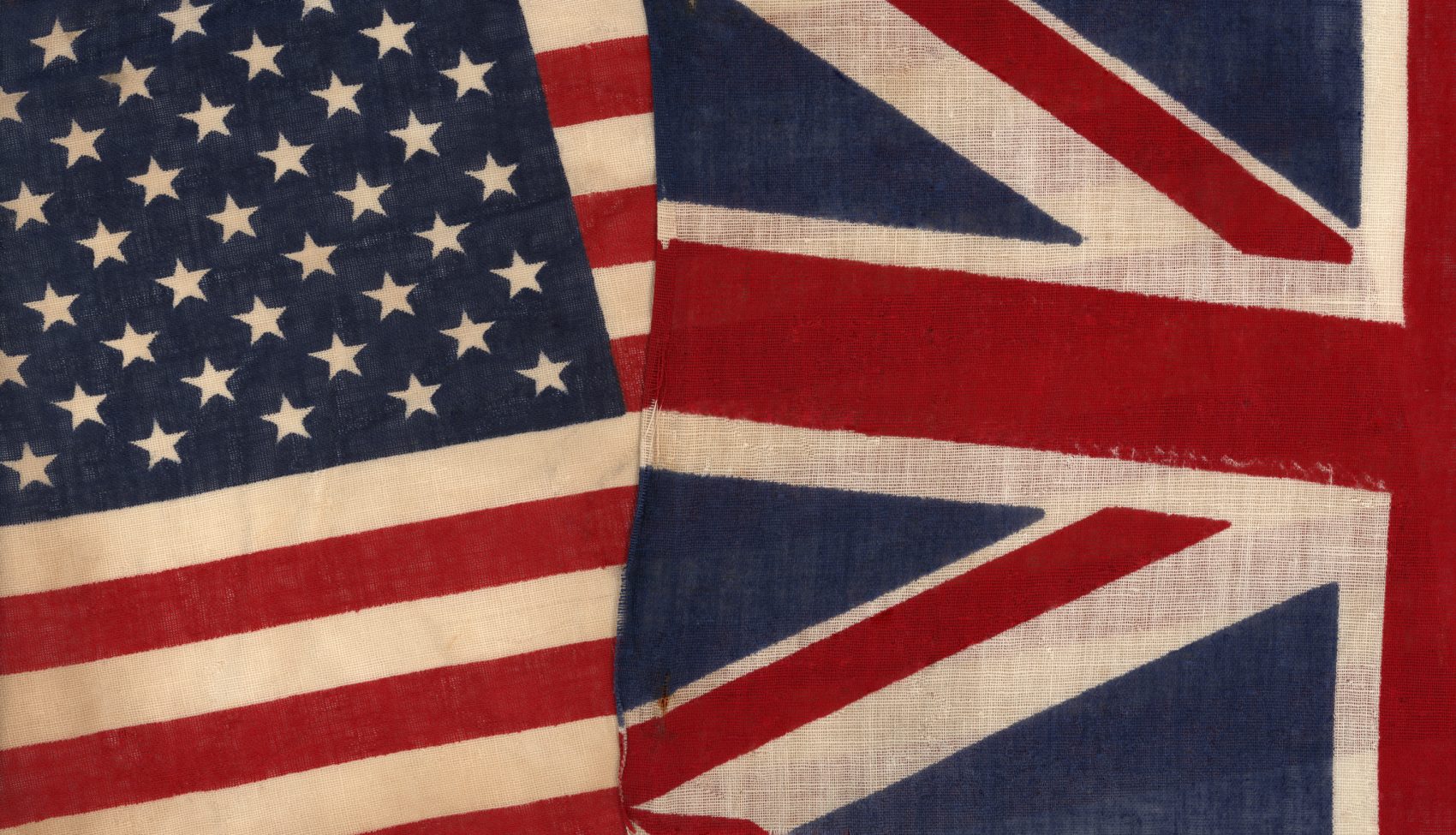
5 Reasons why British English and American English differ

Summer Camp 2022. Learn English at a fun and educational summer camp.

The moment you first start working with English, you soon find out that English is not spoken the same all over the world and therefore does not sound the same. Especially between British-English and American-English there are big differences - not only in pronunciation, but also in spelling and vocabulary. In this article, we'll tell you why.

1. The pronunciation of British and American English developed differently

You may have already learned about the colonization of the Americas in school. If not, we'll give you a brief summary first.

Columbus' voyage of discovery

In the year 1492, the explorer Christopher Columbus set out with three large ships. The goal? To discover the Indies! When land finally came into sight after months of sailing, Columbus thought he had achieved his goal. So he decided to call the inhabitants of this new land "Indians. However, it later turned out that he had not arrived in the Indies, but in America. By now we no longer call the original inhabitants Indians, but for example Native Americans or First Americans, making it clear that these were the first inhabitants of America.

The colonization of the Americas

After Columbus' discovery, all kinds of European countries decided to settle in America in search of wealth. The British also came to America, settling on the east coast. They took their language, (British) English, with them. This language was based on "rhotic speech. This means that the letter 'r' is pronounced clearly.

A new statement

Meanwhile, however, a change was noticeable in Britain. There, people in the upper classes began to pronounce the 'r' less and less often. For example, "winter" was increasingly pronounced "win-tuh. They thought that sounded fancier. In this way, the pronunciation of British English and American English grew further and further apart.

2. British English was influenced by neighboring France

In the year 1066, a profound event took place in Great Britain: William the Conqueror, Duke of Normandy, invaded England with as many as 700 ships. He overthrew King Harold II and became king of England. He took Norman French with him and introduced this language to the upper classes. This had a major influence on the creation of Middle English.

Some examples of the French influence on British English

The French influence mentioned above is still visible today. For example, Britons call a line (for example, in front of the checkout) a "queue. This is a French word. Americans do not use this word: in the United States the word 'line' is mainly used. Also, for example, the British use the word "movie," while Americans mainly say "movie.

3. The Americans and British use different loan words

Even today, we see many influences from other languages in English: English makes extensive use of loanwords. Curiously, these loanwords are not always the same in the United States and the United Kingdom. For example, for coriander, the British use the word "coriander," borrowed from French, while Americans use the word "cilantro" - derived from Spanish, which is mainly spoken in Central and South America.

4. American English has a different spelling in protest

We have already seen above that American English and British English use very different words. However, even when the same words are used, differences can sometimes be seen. In fact, different spellings are often used in American and British English.

A few examples of the differences in spelling

The differences in spelling are easy to spot. For example, Britons often use an 's' in words ending in '-ise', while Americans often replace this 's' with a 'z'. For example, the word "signalise" or "characterise," this becomes "signalize" and "characterize" in American English. You will also often encounter words with 'ou' in British English, such as 'color' and 'honor'. In American English, the "u" is omitted from these types of words and the word changes to "color" and "honor.

Why is a different spelling used?

The American and British dictionaries were both compiled by different authors. When compiling the American dictionary, lexicographer Noah Webster (of the famous Webster dictionaries) chose to adapt American spelling. He felt this was a good way to show America's independence. He also felt that the American spelling was easier to understand, as it better matched the pronunciation of the words.

5. In American English, words are more likely to be omitted

The speaking habits of Americans and British also seem to differ. For example, American-English often omits words. If you ask an American if he or she wants to go to the movies with you, it is quite possible that he or she will say "We could" back. However, if you were to ask this question to a Briton, chances are he or she would say back 'We could go'. This may be caused by cultural differences.

Summer Camp: learning English has never been so much fun!

This article was about English in the United Kingdom and in the United States. However, English is spoken in many more countries. In fact, it is one of the most widely spoken languages in the world! Would you like to get involved with English with your peers? At Summer Camp you will learn English in a playful, relaxed way through sports, music and crafts. Useful for vacations and for later!

Posted on - Leave a comment

After summer camp, how can you continue learning a new language at home?

Summer Camp 2022. Learn English at a fun and educational summer camp.

You went to summer camp and had a fantastic time learning a lot. Of course, the language development doesn't stop after that and you want to continue developing. Even at home you have numerous opportunities to continue practicing the new language. You can consult the Internet, stay in touch with your study buddies or take an additional course, for example.

What kinds of study materials are there to help you learn a language

In this day and age, using the Internet is an obvious option to further develop your language knowledge. There are many websites where, for example, you can keep your grammatical knowledge up to date and test it. Here you can search specifically for exercises that will help you learn rules that you do not yet understand very well.

When you have purchased course materials such as textbooks and workbooks, these days you often also receive a link or login code with them, where online depth is offered. Additional exercises and learning materials can usually be found here as well. It is also possible to track your progress online.

In addition, you probably know of apps that allow you to spend a few minutes or even hours a day brushing up on your new language. These apps also allow you to work on your pronunciation. Very handy!

In what ways might movies/books/podcast or other media help you

To make it even easier on yourself, reading a book or watching a series in another language can also have a great impact on your language development. You expand your vocabulary in this way and get a better sense of sentence structure. You also notice in this way what colloquial language sounds like and what common expressions are, as this is different from written language which is often more formal.

By the way, listening to podcasts is also convenient method to improve your language skills. You can do this at any time of the day while being busy with another activity such as cooking or sports. You will experience what is realistic language use and you can also learn more about the culture and background of a language if you find that interesting. Following a dialogue teaches you to shift gears faster, absorb information and listen more attentively.

How do you stay in touch with your study buddies after summer camp?

If you went to summer camp, you will probably have many contacts and friends left over from this fun time! These are the people you can work with to further develop your language skills. Check each other's assignments and schedule get-togethers or online meetings where you test each other's knowledge.

When you meet with others, you can agree to speak only English or the other language you are learning at that time. This way you can motivate each other and challenge each other well! To make it even more fun, you can also add a game element. For example, you can agree that the first one who accidentally speaks Dutch has to treat for example ?

How can you keep setting goals after your language camp so you can continue to learn the language?

Setting goals is important for further language development. For example, make a planning with your fellow students in which you set longer-term goals. These can be small or large goals that you want to achieve in a year. By testing in between, you will know whether you have made enough progress and where you stand in your development. You can also choose to take an extra course back home or hire a coach to motivate you to reach your further goals.

Posted on - Leave a comment

What do you bring to an international summer camp?

Summer Camp 2022. Learn English at a fun and educational summer camp.

Going to summer camp for the first time is pretty exciting. How do you best prepare? What equipment should you bring? To get you started, we have prepared a packing list for you. With this packing list in hand, you can be sure you won't forget anything important. That way you can hit the road carefree!


What should you really not forget when you go to camp?


Everyone forgets something sometimes - that's not a bad thing at all! You can do without some items for a while. Of some items, however, it is handy to have them with you. We have listed some essential items for you.

1. Your ID and health card
You probably won't need them, but it's still important to bring your ID and health card - just in case! You can also bring a passport instead of an ID.

2. Any medication
Are you taking any medications? Then don't forget to put them in your bag. Are you afraid you will forget to take your medication? Please inform the staff about your medication upon arrival. We will be happy to remind you!

3. Your phone and charger
You won't have much time to spend on your phone, but it's still nice to be able to send your parents or your friends an app every now and then. So don't forget to bring your phone and charger!

4. Personal grooming
Teeth need to be brushed at our summer camp, too, of course! In addition to a toothbrush and toothpaste, it is also important to bring shower gel, shampoo, mosquito spray and a hairbrush. Also consider (if necessary) facial care, deodorant, hair elastic bands, sanitary pads and tampons.

5. Clothing and shoes
Of course, clothes and shoes should not be forgotten either! Bring plenty of underwear, socks and summer clothes. It is also handy to bring a warm cardigan or sweater - after all, in the Netherlands you never know what the weather will do!

6. Study stuff
Every day we will work on English grammar, spelling and vocabulary. It's handy to be able to take notes! It is therefore important to bring a notebook and some pens and pencils. Do you prefer taking notes on a tablet? That too is of course possible.

7. Sun protection and sunglasses
It is incredibly important to protect your eyes and skin from the sun. Therefore, always bring sunscreen and sunglasses. You might also want to bring a cap.


What things are handy to bring?


1. Earplugs
Do you have trouble falling asleep? Then it might be nice to bring earplugs. Especially if you end up in the room with a snorer!

2. A camera
Those beautiful moments at summer camp are something you want to capture forever, of course. For that reason it might be fun to bring a camera. Of course, you can also use your phone's camera.

3. Reading
Fancy a moment to yourself? Reading a book or magazine is a great way to unwind. This also comes in handy when you have a time when you can't sleep or wake up early.

4. Games
Games are played regularly during summer camp. Do you have a nice game at home? Bring it with you! That way you have lots of games to choose from. This is also an excellent way to make new friends!


How can you prepare for learning a new language at home?


Our summer camp is suitable for all skill levels. Everyone is welcome! It is not obligatory to prepare for our English classes, but you are welcome to do so. Below are some ways to work on your English.

1. Time for a Netflix marathon!
A fun way to expand your English vocabulary is to watch English-language Netflix series. If this is too easy with Dutch subtitles, you can also choose to turn on the English-language subtitles.

2. Read an English-language book
Reading an English-language book is also a good way to work on your vocabulary. Don't feel like surfing to Google Translate every time? On an e-reader, you can often see the translation of a word right away when you click on it. If you're not so into books, you can also opt for an English-language blog.